

The Hidden Reason You Keep Choosing the Wrong Person
Relationships, Trauma, Attachment, Coaching, Zest Quest Brisbane
A trauma-informed look at why familiar but painful relationship patterns repeat, and how healing your nervous system can finally change the story.
Key Takeaways
Childhood experiences create emotional blueprints that guide adult relationship choices, often pulling you toward unhealthy but familiar dynamics
Recurring relationship patterns stem from subconscious nervous system recognition of familiar emotional dynamics, not conscious choice or bad luck
Your nervous system doesn't distinguish between familiar-and-healthy versus familiar-and-painful, it simply responds to what feels known
Repetition compulsion describes the unconscious drive to recreate past experiences in hopes of achieving different outcomes through new relationships
Common unconscious roles (The Rescuer, The Fixer, The Pursuer) develop as childhood survival strategies that persist into adult relationships
Breaking free requires healing original wounds through trauma-informed approaches rather than relying solely on willpower or conscious insight
📌 Key Takeaway: You are not broken or unlucky; your nervous system is following an old map it learned in childhood.
It Happened Again
It Happened Again. You know the feeling. You're a few months, maybe a year, into a new relationship. Something starts to feel familiar. Not in a warm, comfortable way. In the way that makes you sit quietly one evening and think: "Haven't I been here before?" Different person. Different face. Different stories. But the same emotional dynamic. The same roles. The same slow unravelling in the same way.
Maybe you attract emotionally unavailable partners and spend months trying to crack them open. Maybe you end up carrying your partner's emotional weight until you're exhausted and resentful. Maybe you're always the one who loves more, gives more, needs less, until eventually you have nothing left to give.
You might have told yourself it's bad luck. Or that you're just terrible at picking people. Or, and this is the one that really stings, that maybe something about you is fundamentally broken.
Here's what I want you to hear before we go any further: "You are not broken. You are not unlucky. And you are not choosing these relationships consciously."
You're following a map. A map drawn long before you were old enough to question it. And that map has been quietly directing your choices ever since.
It's Not Bad Luck, It's a Blueprint
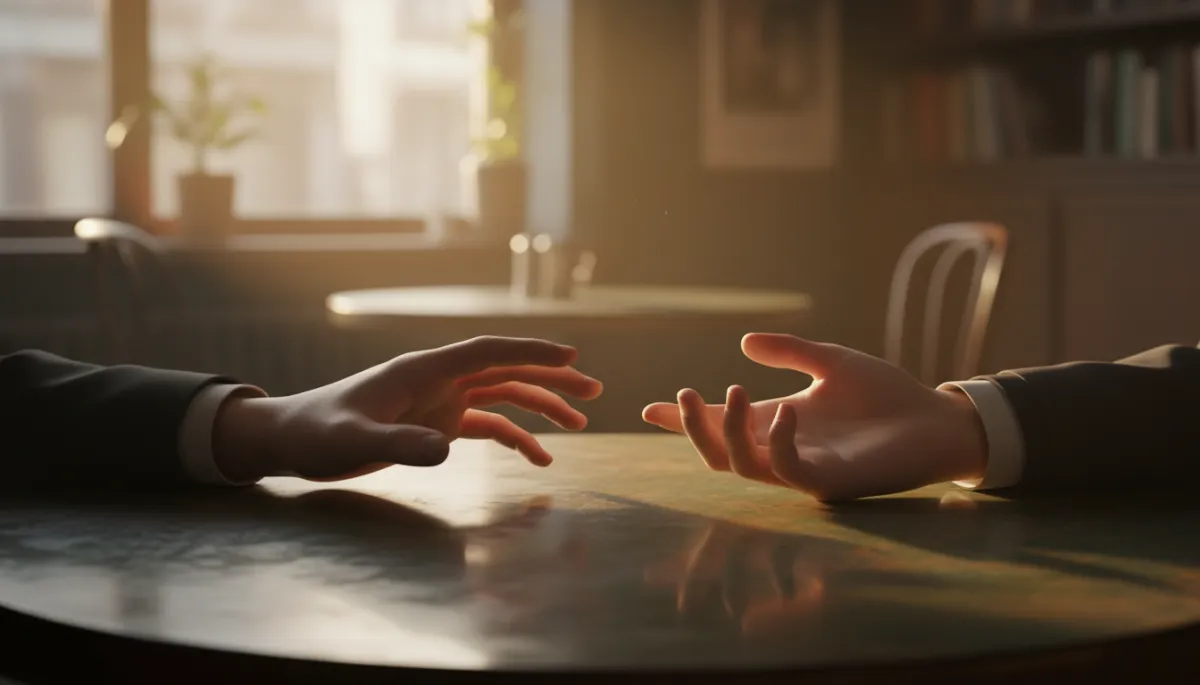
Most of us grow up believing attraction is chemistry. That gut feeling. That "spark." And in some ways, it is. But here's what most people aren't told: that spark is often your nervous system recognising something familiar. Not familiar as in "I've met this person before." Familiar as in: this emotional dynamic feels like home.
From the time we're very young, our brains are building a template. A blueprint of what love, connection, safety, and closeness feel like. That blueprint is built from our earliest experiences, not our adult ones. It's woven together from the way our parents related to each other, how they related to us, what we had to do to feel safe, seen, or valued. And here's where it gets important: familiar doesn't mean healthy. It just means known.
Your nervous system doesn't distinguish between familiar-and-healthy and familiar-and-painful. It just knows the feelings of "familiar". And when someone walks into your life and activates that feeling, when the emotional dynamic maps onto something you've experienced before, it registers as connection. It can feel like chemistry. Like "this person just gets me." Like you've known them for years. What's actually happening is your subconscious going: I know this. I know how to navigate this. This is where I belong. Even if "this" is a dynamic that will ultimately cause you pain. This isn't a character flaw. It is a survival map that's out of date.
💡 Pro Tip: When you feel an intense "spark," gently ask yourself: does this feel safe-new, or familiar-old?
The Unfinished Story Your Nervous System Is Still Trying to Complete
There's a concept in psychology, known as repetition compulsion, that explains this in a way that I think most people have never had explained to them properly. Your subconscious doesn't repeat painful patterns because it enjoys suffering. It repeats them because it's still trying to get a different ending to an old story.
The original emotional wound, whatever happened in your past that left an emotional mark, didn't get resolved. The 8-year-old who felt invisible. The teenager who was never quite enough. The child who had to be strong, or responsible, or who learned that love came with conditions. That wound is still there, filed away in the part of your brain called the amygdala, where trauma and emotional memory are stored.
And here's the thing about the amygdala: it doesn't timestamp memories the way your thinking brain does. To your subconscious, an unresolved emotional wound from childhood feels as current and as urgent as something that happened yesterday. So every time you enter a relationship that activates that wound, every time you find yourself in a dynamic that emotionally echoes your original experience, your subconscious says: This is my chance. Maybe this time, it will end differently. But it doesn't end differently. Because you can't resolve a childhood wound with an adult relationship. The wound is in the wrong place. The mission is being run by the wrong version of you.
This is why understanding the pattern intellectually rarely breaks it. You can read every self-help book, talk to every friend, recognise the red flags, and still feel magnetically pulled toward the same kind of person. That pull isn't coming from your conscious mind. It's coming from somewhere far older and far more powerful.
The Role You Didn't Know You Were Playing
When we talk about unhealthy relationship patterns, most people imagine the obvious: the victim who keeps choosing abusers. But it's rarely that clear-cut. The roles we unconsciously play in relationships are more subtle. And they're usually assigned to us long before we had any say in the matter.
Some people become The Rescuer, drawn to partners who are struggling, broken, or in need. The Rescuer feels most comfortable, most needed, most loved when they are fixing someone, being the hero/heroine. Their worth is tied to being useful. Without someone to save, they feel purposeless.
Some become The Fixer, forever falling for potential, not reality. Their partners are always "almost there." Just one more breakthrough, one more year, one more chance. The Fixer keeps extending credit that never gets repaid.
Some get locked in The Pursuer-Withdrawer dance, anxiously chasing the partner who pulls back, feeling most alive in the tension of uncertain love.
These aren't weaknesses. They were adaptations. Smart, creative responses to an early environment that shaped what "closeness" looked and felt like.
I know this routine from the inside. For years, I had a very clear pattern in my relationships. I was The Rescuer — in fact I was a chronic rescuer. I had developed an almost uncanny ability to identify women who were hurting. And I would swoop in, the knight in shining armour, ready to carry what they were carrying, to be steadfast when they couldn't be.
And in the beginning of each relationship, it felt wonderful. These women would respond to my attentive 'rescuing' with warmth and adoration, and something inside me, something that needed or at least craved that adoration, felt deeply fulfilling.
But here's where the pattern always turned. Being emotionally strong all the time is exhausting. Carrying someone else's insecurities on top of your own, for months, for years, takes a toll. I'd start to feel less like a partner and more like a parent. Less like an equal and more like a support structure. And slowly, quietly, resentment would build. Both of us dissatisfied with a relationship built on a shaky foundation.
📌 Key Takeaway: Roles like Rescuer or Fixer once kept you safe; now they keep you stuck.
Where It Really Starts
The real question isn't who you keep attracting. It's 'when did this begin?' For me, the answer took me back to a memory I hadn't consciously thought about in decades. I was four years old. My parents were arguing. My father's words were loud and harsh, and my mother was distressed. And something happened in me, something instinctive and loving and completely beyond my ability to act on, where I wanted to step in. To protect her. To make it stop. But I was four. I was powerless. There was nothing I could do.
That moment, that helplessness, that unresolved urge to rescue didn't leave me. It got stored in my nervous system as an unfinished mission. And for the next few decades, I kept unconsciously recruiting women who I could rescue.
Trauma doesn't stay in memory alone. It lives in your body, the very cells of your body. It lives in your nervous system. According to leading trauma researcher Bessel van der Kolk, the body keeps the score, meaning the emotional charge of unresolved experiences gets stored somatically, influencing our reactions and choices in ways that bypass conscious thought entirely. To your nervous system, there is no past. There is only now, and the echoes of then.
Why "Just Choose Better" Doesn't Work
At some point, most people recognise their pattern. They'll say: "I always end up with emotionally unavailable people," or "I'm always the one who gives more." They'll decide, consciously and sincerely, to choose differently next time. And then they don't. Not because they lack intelligence or willpower. But because willpower operates in the conscious mind, and the pull toward familiar patterns comes from the subconscious.
Your conscious mind is like the captain of a ship giving orders on the bridge. Your subconscious is the ocean the ship is sailing through. No matter how clearly the captain shouts, the ocean moves the ship the way the ocean moves.
This is why you can sit with a friend, dissect a new relationship, list all the red flags, acknowledge the familiar pull, and still go back. Still text them. Still give it "one more chance." It's not weakness. It's not stupidity. It's the gap between insight and healing. Insight tells you what the pattern is. Healing changes the underlying conditions that create it.
The Turning Point
For me, the shift didn't come from reading about my pattern. It came from doing the deeper work — going back to the original wound and resolving the emotional charge that had been sitting there since I was a child.
When I found the moment where my rescuer identity was born — that four-year-old hiding helplessly behind a lounge chair, while his parents argued — and I was able to address the pain and helplessness held in that memory, something shifted. Not overnight. Not without support. But genuinely, at the root.
Because here's what changes when you heal the original wound rather than manage the symptoms: the subconscious mission gets completed. The four-year-old doesn't need to run the show anymore. The adult can make choices that come from genuine desire and values, not from an old unresolved urgency. I stopped being drawn to women who needed rescuing. Not because I suppressed the impulse. But because the wound that made those women feel like home was no longer there. And for the first time, I could begin a relationship as an equal. As a partner. Not as a knight, not as a rescuer, just as a healthy male adult.
This is the work I do with clients through The Richards Trauma Process (TRTP). Not talking about the past endlessly. But going directly to where the emotional charge lives — in the subconscious mind and the body — and completing the story that's been left unfinished. Often within just a few sessions, the patterns that have persisted for decades begin to shift.
💡 Pro Tip: Look for approaches that work with the body and subconscious, not just talk about the story.
How to Begin Recognising Your Own Pattern
You don't need to wait until you're in another painful relationship to start this work. Here are three places to begin:
1. Name the emotional theme, not the person — Think back over your last two or three significant relationships. Focus on how you felt. Was there a recurring emotional experience? That emotional theme is the thread that connects the dots.
2. Trace it back to before adulthood — Ask yourself: when did I first feel this way? Not in a relationship, earlier. In your family. In your childhood home. The emotion you keep encountering in relationships almost certainly has an earlier origin.
3. Recognise that insight alone won't complete the work — This is subconscious work. The wound lives below the level of conscious thought, which means it needs to be addressed at that level. Working with someone who understands trauma-informed approaches isn't a sign of weakness, it's the most direct path through.
You're Not Broken. Your Story Is Unfinished.
The pattern that's been following you through your relationships isn't evidence that you're damaged or defective. It's evidence that a younger version of you experienced something they didn't have the resources to process, and that part of you has been quietly, persistently trying to find resolution ever since.
That's not brokenness. That's loyalty to an old wound. And the good news — the genuinely hopeful news — is that old wounds can be healed. The story doesn't have to keep ending the same way. The blueprint can be redrawn.
Not by finding the "right" person. By finally meeting themselves.
If you recognise yourself in any of this — the repeating patterns, the exhaustion, the gap between knowing and changing — I'd love to have a conversation. A free 45-minute Rapport Session is the place to start. No obligation. No hard sell. Just an honest conversation about where you are and whether this work feels right for you.
→ Book your free Rapport Session at zestquest.com.au


