

How to Stop Your Inner Critic From Running Your Life, Without Trying to Silence It
If you’ve ever caught yourself thinking “I’m not good enough”, “You’re going to mess this up”, or “Why bother? No one will like me anyway”, you’re not alone. That voice you hear? It’s your inner critic. And for far too many of us, it’s running the show, quietly chipping away at our confidence, our relationships, and our zest for life.
That voice in your head that criticises every mistake or pre-emptively is pushing the ‘perfect’ strategy. It didn't just appear, it was carefully constructed in your childhood as a survival tool, trying to keep you aligned with your parents. And shame is it’s number one tool. Discover why your brain clings to self-criticism even when it's punishing you, and how neuroplasticity offers a surprising escape route.
"The critic doesn’t appear out of nowhere, it grows out of the wounds the inner child carries." Stephen Ellerker
Key Takeaways
Your inner critic developed as a survival mechanism during childhood, originating from external criticism and negative experiences with caregivers or authority figures.
The often harsh inner voice persists into adulthood because your brain formed deep neural pathways that served a protective function when you were vulnerable.
You can transform your inner critic from enemy to friend through specific techniques including recognition, personification, and compassionate reframing
Neuroplasticity allows you to rewire self-critical thought patterns by creating new neural pathways.
That harsh voice in your head didn't just appear one day. It began forming when you were young, vulnerable, and your survival instincts relied on an emotional diet of love and acceptance. Understanding where your inner critic comes from, and why it clings so tenaciously to its role, is the first step toward transforming self-attack into self-compassion. Do this and you’ll discover a renewed freedom to engage in life positively and with more fulfilment.
Your Inner Critic Was Born to Protect You
Your inner critic isn't your enemy, though it can certainly feel that way. It's actually an important part of you that developed with one primary mission: protecting you. When you were a child, this voice emerged as a guardian, a gatekeeper trying to protect you from embarrassment, rejection, and abandonment. Your inner critic has been “warning you” and “telling you” what you “should or should not” be doing before you do something. Or it has been “correcting you” and “admonishing you” for not getting it right!
The problem is, your inner critic learned these protective strategies during a time when you had limited reasoning abilities and understanding of the world because you were simply a child. It seems ironic that something learned in innocence can have such long lasting debilitating effects.
The inner critic believes it's doing valuable work by maintaining your values and expectations. The ones you grew up with. It operates perfectly according to its original programming, highlighting perceived flaws and pushing you to avoid mistakes. Mental health professionals recognise that whilst this internal voice tries to shield you from pain, it often ends up creating the very suffering it aims to prevent.
Despite making you feel terrible when it kicks in, your inner critic genuinely believes it's performing a service. It's not broken, it's functioning exactly as it was designed to, based on the survival strategies you developed as a vulnerable child.
How Critical Voices Become Your Own
The transformation from external criticism to internal self-attack doesn't happen overnight. It's a gradual process that begins in your earliest years, shaped by the people and environments that surrounded you during your most impressionable moments.
1. Survival Through Self-Criticism
Children instinctively understand that survival depends on maintaining connections with their caregivers. When faced with criticism, rejection, or emotional withdrawal, a child's developing mind makes a crucial calculation: "If I criticise myself first, maybe I can avoid their disapproval." This self-protective strategy allows the child to anticipate and deflect external criticism by beating others to the punch.
Research shows that individuals with harsh self-critical tendencies often experienced frequent judgements, ridicule, and a lack of positive regard during childhood, particularly from parents and school environments. The child internalises critical expressions as a way to avoid potential rejection, creating an internal system that monitors and corrects behaviour before it can invite outside criticism.
2. When Caregivers Shape Your Inner Voice
Your inner critic often echoes the exact words and attitudes of significant figures from your childhood. It might reflect a parent's constant irritation, a teacher's dismissive comments, or even unspoken cues like emotional withdrawal when you made mistakes. It may begin as off-handed comments from parents who are busy, stressed, and emotionally immature. Loving parents who’s actions and words were interpreted through the eyes, ears and limited understanding of a small child. However, their parents become an internalised voice that continues the pattern of emotional neglect or judgement well into adulthood.
The power of these early influences cannot be overstated. One careless negative comment from someone in a position of power, whether that's a parent, teacher, or even a peer like a school friend, can shape decades of self-perception. Unspoken cues can be just as damaging as direct criticism, with children picking up on subtle signals of disappointment or rejection that inform their developing sense of self-worth.
3. The Power Dynamic That Sticks
The most lasting inner critics develop in relationships where there was a significant power imbalance. Children naturally look up to adults and peers in positions of authority or social power, making their words carry enormous weight. When someone a child trusts or wants to please delivers criticism, whether intentional or not, that message can become deeply embedded in the child's developing psyche.
Even comments from peers can create lasting inner critics when they come from someone the child desperately wants acceptance from. A single moment of rejection or criticism from a friend, sibling, or classmate can echo for decades if it occurred during a particularly vulnerable moment in time in the child's development.
Why Your Brain Won't Let Go
Understanding why your inner critic persists requires looking at both the neurological and psychological mechanisms that keep it firmly in place, even when it's clearly causing more harm than good.
The Neural Pathways of Self-Attack
Every time your inner critic activates, it strengthens specific neural pathways in your brain. Think of these pathways like well-worn tracks through a forest, the more frequently they're used, the deeper and more automatic they become. Self-critical thoughts create deeply ingrained patterns that your brain can access quickly and efficiently, making them feel like the natural response to any challenging situation. For some, they incorrectly correlate this as a personality trait.
For example, if my three year old self has toys all over floor and my mother repeats how “messy” things are with a certain tone of voice, I could interpret that as “I am messy, messy isn’t good and therefore I am not good” and the programming in my mind begins. Now my inner critic can shame me every single time I am messy at the age of three, thirteen and thirty-three. In turn I will then relive the feelings of “I am not good” every time.
Neuroplasticity research reveals that these self-critical thought patterns literally reshape your brain structure over time. The neural connections associated with your inner critic become so well-established that they feel like an integral part of who you are, rather than learned responses that can be changed.
When Protection Becomes Prison
For adults who experienced emotionally immature parents, chronic stress, or childhood trauma, the inner critic isn't merely a habit, it formed out of genuine necessity to ensure safety and survival. This makes it incredibly persistent because, in your brain's assessment, letting go of this protective mechanism could be dangerous.
The inner critic's persistence stems from its original protective role, which it learned during difficult childhood circumstances. To be clear, not necessarily having a terrible childhood, but rather a child experiencing difficult circumstances within their childhood. A small person’s innate desire for love and acceptance are the drivers, and avoiding rejection, disapproval and feeling inadequate are paramount. We are mammals and it’s coded into our DNA to stay with the pack, meaning family environment, or else life may be limited.
Even when it pushes someone closer to emotional breakdown, the inner critic's motivation remains survival focused. This creates a painful paradox: the very mechanism designed to keep you safe becomes a source of ongoing suffering, but your brain continues to rely on it because it once served as a protective function.

Turning Your Critic Into an Ally
Transforming your inner critic requires a fundamentally different approach than simply trying to silence or banish it. The goal is integration and repurposing, not elimination.
"Talk to yourself as you would someone you love." — Brené Brown
1. Recognise Without Resistance
The first step is slowing down enough to recognise when your inner critic is active. This isn't about judging the voice or trying to make it disappear, it's simply about awareness. Notice that this is just one part of you, not your entire identity, and that it doesn't have to be the part that drives your decisions.
Recognition means identifying what the critic is actually saying, when it becomes activated, and what triggers typically precede its appearance. This awareness creates space between you and the critical voice, allowing you to observe it rather than being completely consumed by it.
2. Give Your Critic a Name and Face
Personifying your inner critic transforms it from a vague, overwhelming force into something tangible you can interact with. You might recognise whose voice/s it actually represents, perhaps a parent, teacher, school tormentor, or childhood authority figure. Recognise that this critic has become a part of you, something developed in your psyche and is not “you” or someone else.
Choose a name for this part of yourself, it could be "The Bitch", "The Basher", or simply "Fred”. Pro Tip: It’s best not to identify it as Mum, Dad or someone you know. By giving your inner critic a distinct identity, you create the possibility for dialogue rather than simply being subjected to its commentary. This personifying allows you to engage with the critic as you would another person, with curiosity and eventual compassion.
3. Rewrite the Script with Compassion
Approach your inner critic with helpful qualities that can shift the dynamic: compassion, clarity, curiosity, and confidence.
Think of these four qualities as your toolkit for the conversation. Compassion means you're not walking in to fight, you're walking in to understand. You're acknowledging that this part of you was doing its best with what it had. Clarity is about seeing the inner critic for what it actually is: a protective voice that got stuck in old programming, not the truth of who you are. Curiosity shifts everything. Instead of reacting, you start asking meaningful questions. When does this voice show up? What's it really afraid of? Where did this come from? That one shift alone takes you out of being the victim and puts you back in the driver's seat. And then there's confidence, the firm, grounded authority you bring to the relationship. Not aggression, not dismissal, but a clear message: I hear you, and I've got this. When you bring all four of these to the table, you're no longer a child being told off. You become the steady, capable adult in the room, and that changes everything.
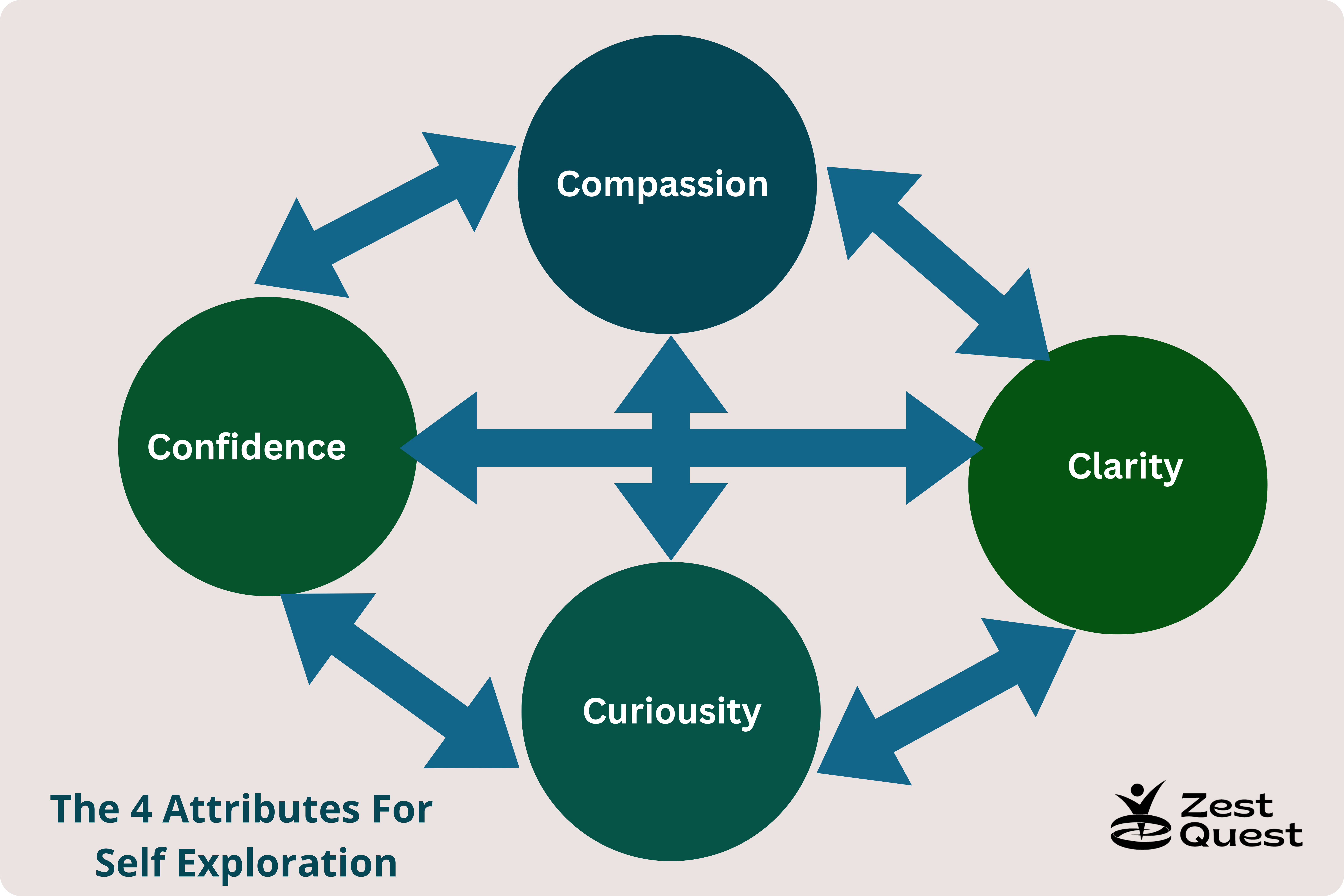
Instead of reacting like a child being scolded, you can become the wise, caring adult in the relationship. Express gratitude for the critic's attempts to protect you, even while acknowledging that its methods need updating. Repurpose your inner critic from a persona who is destructive to a persona who is constructive. Then give this new persona a new name, a better name, perhaps “The Encourager”, “My Cheerleader”, or any inspiring or feel good name.
This involves reframing your self-talk from criticism to support. Ask yourself: if your best friend was struggling with the same issue, would you reinforce their self-criticism or offer compassion? Extend that same kindness to yourself, recognising that mistakes and imperfection are part of being human, not evidence of fundamental flaws.
4. Challenge Old Messages with Authority
Sometimes you need to be firm with your inner critic, just as a good parent sets boundaries with a child. Challenge the old messages directly, letting the critic know what's no longer acceptable or useful. This isn't about aggression, it's about establishing healthy authority over destructive thought patterns.
When you recognise outdated criticism arising, respond with statements like "No, I'm not accepting this," "I am good enough," or "We'll do better than this." Because you've already identified where these messages originated, you can recognise and challenge them more effectively, taking control of the narrative rather than being controlled by it. Give yourself the compassionate tough love you desired as a child. Engage your adult self to be strong for your inner child and guide them with the recognition that their biggest drivers are to be loved and accepted.
Your Brain Can Learn New Patterns
The science of neuroplasticity offers genuine hope for anyone trapped in cycles of self-criticism. Your brain's ability to reorganise itself and form new neural pathways means that even deeply ingrained self-critical patterns can be rewired through intentional effort, positive practice and communicating directly with your subconscious mind.
Creating new neural pathways can be facilitated quickly because you can literally “change your mind”. Ensuring the new pathways are strengthened requires repetition and reinforcement. Each time you choose self-compassion over self-criticism, you reinforce these new pathways, making them easier to access in future challenging situations. This process occurs in your subconscious, and is fortified by positive decisions in the conscious mind. The brain's capacity for change remains active throughout your entire life, so utilise that capacity. The strengthening of these pathways through repeated use allows for more efficient signal transmission, making positive responses more automatic over time.
The repurposing of your inner critic represents neuroplasticity in action. You're not just changing thoughts, or ‘thinking positively’, you're literally rewiring your brain to support rather than sabotage your wellbeing. This neurological retraining allows you to develop new beliefs, values, and behaviours that serve your adult self rather than the frightened child who first needed protection but remained in the driver’s seat.
Transform Your Inner Critic Into Self-Empowerment At Zest Quest
The path from believing those hash, cruel and shaming inner voices to self-compassion and feeling worthy is waiting for you and is absolutely possible. When you understand that your inner critic developed as a survival mechanism to protect you during childhood, you can approach it with the curiosity and compassion it needs to transform from enemy to reliable friend.
"You’ve been criticising yourself for years and it hasn’t worked. Try approving of yourself and see what happens." — Louise L. Hay
Through recognition, personification, repurposing and healthy practice of new thought patterns, you can rewire decades of self-critical programming and set yourself up for decades of self-acceptance, encouragement and worthiness. Your brain's neuroplasticity ensures that no matter how entrenched these patterns feel, change remains possible at any stage of life.
The end result isn't the elimination of your inner critic, but its integration as a supportive teammate rather than a harsh taskmaster. This transformed inner voice becomes a source of strength and encouragement, helping you navigate life's challenges from a place of self-compassion rather than self-attack.
Ready to transform your relationship with your inner critic and develop lasting self-compassion? Learn how Zest Quest's unique approach can guide you through this transformative process.